Erika Whittaker
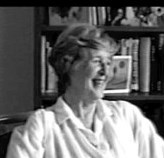
Erika Whittaker (1911 – 2004)
Erika Whittaker (née Schumann) was born in Metz on 23 August 1911. Her mother, Elsie Webb, was the youngest of eight children of George and Annie Webb; George was the founder of the famous jewellers and silversmiths, Mappin & Webb. Elsie had been among the first students at Roedean School, studying alongside Isabel Fry—the pioneering Quaker educationalist—and the Duncan sisters, Isadora and Elizabeth.
While voyaging to China with her mother, Elsie met Hans Schumann, a young musician in the German army. Hans had been assigned a post in China as a personal favour from the Kaiser, who was impressed by a concert Hans had arranged. The two fell in love during the journey, later married, and Erika was born as their middle child.
Erika spent her early years in Germany, but her mother wanted her to receive an English education. In 1919, she sent Erika to the experimental Farmhouse School in Wendover, run by her old school friend Isabel Fry. The school emphasised practical training in farm and domestic duties. Around this time, Erika was diagnosed with scoliosis. Fortunately, her aunt Ethel Webb—an early pupil and later secretary of F. M. Alexander—began giving her “lying-down turns” and encouraging her to “keep her length” while playing piano or writing. Erika would later attribute much of her foundational understanding of Alexander’s work to this early, activity-based experience.
At about fourteen, Erika was sent to study dance with Elizabeth Duncan in the Austrian Alps. She was expected to go on to the Mozarteum in Salzburg to study voice and violin, but her mother’s death in 1927 brought that plan to an end1.
Around 1929, Erika began lessons with F. M. Alexander himself. She recalled those early lessons as informal and filled with laughter. While at Ashley Place, she also assisted by typing letters and giving “lying-down turns” under her aunt Ethel’s guidance. Irene Tasker invited her to help in the “Little School,” which was already flourishing. Erika later credited Tasker’s practical approach as vital to her development, and it became the framework she brought with her into the first formal training course in 1931.
Her recollections of that course highlight its experimental nature—it was a new experience not only for the students but also for Alexander himself. The emphasis was on applying the work to daily life and remaining playful with the process. Later, concerns arose that the course lacked instruction in how to teach. Erika disagreed, believing Alexander never intended to provide a fixed method. He wanted students to think independently, explore their own interpretations, and avoid merely copying his style.
After completing the course, Erika and her close friend Irene Stewart stayed on as assistants at Ashley Place. They spent some time teaching in Birmingham under Alexander’s weekly supervision. Still, Erika grew dissatisfied with the culture at Ashley Place, which she saw as insular and elitist:
“…there seemed to be a tendency at Ashley Place to have the attitude that we were the clever ones and the people out there don’t know anything… I wanted to find out what else was going on in the world.”2
During her time at Ashley Place, Erika met Duncan Whittaker, a young doctor enrolled on the course. They married in July 1940 and had a daughter, Anne. The years following the war were largely devoted to family life in the West Country, and Erika stepped back from professional Alexander work.
By the late 1950s, facing difficulties in her marriage, Erika visited her brother in Australia and decided to emigrate. It was a chance for a fresh start. She explored Papua New Guinea and found work at a Highland Anglican Mission teaching maths and English. She enjoyed the challenge of creatively engaging the children—especially boys who initially resisted having a female teacher. Later, in Melbourne, she coached girls for exams, subtly using Alexander principles without naming them.
In 1971, at a time when most would retire, Erika enrolled in university to study Middle Eastern religions, Arabic, and Sanskrit. Her interest took her to Iran. In 1976 she returned briefly to the UK, but she missed Australia’s openness and climate and moved back to Melbourne in 1980.
In the mid-1980s, the Alexander world came knocking. She was invited to deliver the 1985 STAT Annual Memorial Lecture and visited various training courses in London, reconnecting with a new generation of teachers. She collaborated with Marj Barstow, participated in international congresses in New York (1986) and Brighton (1988), and gave the keynote speech at the latter. In 1990, she was hit by a car while crossing the road and spent a long time recovering—a period she characteristically viewed as a learning opportunity, exploring how attitudes and thinking affect the body.
Support from younger Melbourne teachers helped her through this recovery, after which she made further visits to London, the U.S., and Munich—her childhood city. She continued supporting congresses, including those in Sydney and Jerusalem.
In 1997, due to health concerns, Erika moved from Melbourne to Edinburgh to be closer to her daughter and grandchildren. Even in her late eighties, she remained active, attending conferences in London, Manchester, and the 1999 International Congress in Freiburg. A fall later that year left her with a broken hip, ending her travels. Nonetheless, international visitors continued to seek her out at her residence near the Edinburgh Botanical Gardens.
Her 90th birthday was celebrated over several days, bringing together the diverse strands of her life—family, friends, and the Alexander community.
Sadly, Erika suffered a severe stroke in 2001. She passed away on 19 May 2004, with her daughter and granddaughter at her side. A memorial service was held in Rosslyn Chapel, and she was buried overlooking the Lammermuir Hills.
With her distinctive presence and deep poise, Erika stood out. She could be serious and incisive, yet warm and playful. Her life was full of unexpected turns, and she remained curious and open. Many in the Alexander community saw her as enigmatic—deeply rooted in the early history of the Technique, yet absent from it for long periods. Her surprise return in the 1980s, bounding on stage at the 1985 lecture, astonished audiences. She looked no older than fifty, but when she spoke about events from the 1920s, it became clear that she had been there—she was seventy-four2.
Many quickly realised they were in the presence of someone extraordinary: a living link to F. M. Alexander and his first students, with a life experience that reached far beyond the Technique. Her insights were fresh and often challenging. She was critical of what she saw in training courses—often calling the work “precious” or “artificial”—and warned that modern teachers might be sleepwalking through their practice, unaware of the real-world decisions shaping their inner and outer lives.
After observing the 1st International Congress in New York, she felt compelled to speak out. Encouraged by Marj Barstow, she delivered a keynote address at the Brighton Congress in 1988, where she warned:
“I see a great danger of his work suffering the same fate as that of many other great original innovators in the history of the world. It is a pretty familiar pattern. Successors to the master tend to launch into interpretations, which in time cause arguments, dissensions, disagreements, splits into schools or sects, fragmentation leading to dogma, to tradition, and to fixation.”3
For Erika, teaching wasn’t a skill to be acquired; it was a way of living. Her concept of “use” went far beyond posture—it involved all of life: how we think, eat, move, make choices, relate to others, and take responsibility for ourselves. She often quoted Alexander’s blunt retort to those who complained:
“Well, you are doing it.”
This, for her, was the core of personal responsibility. Though she rarely imposed her views, her words were rich with implication4.
You learned from Erika not through formal instruction, but through her way of being. She didn’t conform to expectations—she resisted roles, avoided giving people the “turn” they might hope for, and delighted in deflecting attempts to pin her down. When she did lay hands on someone, the effect was often transformative: a quiet, integrating touch that connected people with themselves and their environment.
Erika’s interests extended well beyond Alexander’s work. She loved music, myth, and pottery—particularly the work of Shoji Hamada and Bernard Leach. She was also deeply engaged in Eastern traditions, especially Islam, Zen Buddhism, Taoism, and traditional medicine. Her library included annotated favourites such as Monkey and The Secret of the Golden Flower, in which she drew parallels to Alexander’s ideas. She believed the best teaching occurred when the pupil didn’t even know they were being taught—through humour, an aside, a pause, or an unexpected gesture.
She credited much of her practical and intuitive approach to two women she felt were underappreciated: her aunt Ethel Webb and her friend and mentor Irene Tasker, whom she liked to quote:
“… the teaching of A.T. combined with something else – a means to an end, not an end in itself.”5
Perhaps Erika’s most lasting legacy was her ability to connect. Her life was her teaching, and the ripple effects of her presence continue to unfold. She reminded us all—gently, profoundly—that the Alexander Technique is for living.
Footnotes
- Erika’s daughter, Anne Cragoe, supplied some of these biographical details.
-
Annual Memorial Lecture, STAT 1985.
-
Keynote Address to Brighton Congress, 1988. Published in Direction, Volume 1 Number 5, and in The Brighton Congress Papers.
-
Annual Memorial Lecture, STAT 1985; Keynote Address, Direction 1988; Alexander’s Way, STAT Journal 1993; Recollecting F. M. Alexander, AUSTAT News June 1997; The Congress Papers – Back to Basics (Jerusalem 1996), Shmuel Nelken, 1999; The Congress Papers – An Ongoing Discovery: Looking Towards the 21st Century (Freiberg 1999), STAT Books, London, 2000.
-
The Alexander Journal, No. 13. STAT.
___________________________________________
First published in STATNEWS, 2004. Revised 2025.
© 2004 & 2025 John S Hunter


 Upward Thought
Recent Comments